
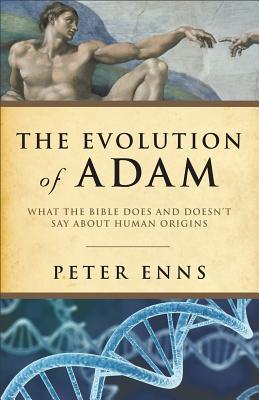
The Evolution of Adam: What the Bible Does and Doesn’t Say About Human Origins by Peter Enns
Summary
Can Christianity and evolution coexist? Traditional Christian teaching presents Jesus as reversing the effects of the fall of Adam. But an evolutionary view of human origins doesn’t allow for a literal Adam, making evolution seemingly incompatible with what Genesis and the apostle Paul say about him.
For Christians who both accept evolution and want to take the Bible seriously, this can present a faith-shaking tension. Popular Old Testament scholar Peter Enns offers a way forward by explaining how this tension is caused not by the discoveries of science but by false expectations about the biblical texts.
My Thoughts
I really appreciated this book. The reading I have done so far on Christianity and evolution focused on the various beliefs about the origins of life as well as the stories of a worldwide flood, and I hadn’t really thought about the implications of this as it relates to the existence of Adam.
Enns spends time discussing the appearance of Adam in the Old Testament as well as the mentions made of Adam by Paul in the New Testament. He explains a lot about the cultural and theological environments of both times and how those environments affected the way the Scriptures were written, as well as how the time we live in affects the way we interpret it.
As he states in Chapter 6: Paul as an Ancient Interpreter of the Old Testament:
The authors of Scripture did not speak at a safe distance from their culture but wrote as people living in a particular time and place in human history….The Old Testament already does in principle what Paul is doing here: reworking the past to speak to the present….It is the very act of altering the past to address present circumstances that ensures Scripture’s continuation as the active and abiding Word of God, not a relic of a bygone era.
The Evolution of Adam gave me a lot to think about, and I am glad I got the chance to read it. I would recommend it to anyone with an interest in the topic.

 In So Many Words