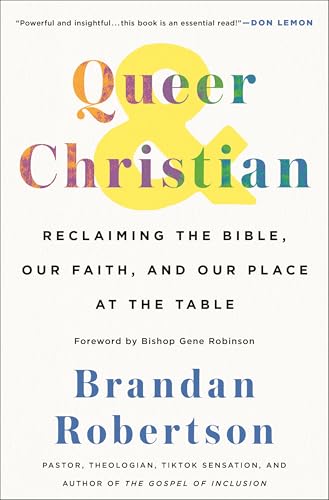
Queer & Christian

TL;DR

I really appreciated Brandan Robertson’s book Queer & Christian: Reclaiming the Bible, Our Faith, and Our Place at the Table. He does discuss the clobber passages that have been used by many in the church to condemn queer people, but he also goes well beyond these to talk about the place of queerness in our theology and practice of Christianity. 

He bookends the theological discussions with his personal testimony of becoming a Christian and experiencing a lot of harm from the church until he got to a place of peace regarding his identity and his faith and a Q&A where he answers commonly asked questions related to queerness and the church.

Further Thoughts

In chapter 1, Robertson shares a usage of the word queer that means “to disrupt arbitrary norms, making space for diverse and often marginalized existing and perspectives to flourish.”  He suggests that, based on that definition, the church needs queering in many ways. In addition to the full inclusion and acceptance of LGBTQ people, this idea also makes me think of how women are only tolerated at conservative churches if they toe the line of submission and how black and brown people are welcomed in those same spaces only to the extent that they make themselves fit in with the predominantly white culture.

Part 1 of the book continues with his personal story – from feeling different even as a child to becoming a Christian as a teenager and subsequently learning that the church that seemed to welcome him actually had a lot of conditions on their love, to going to Bible college and trying to pray the gay away, to deconstructing a lot of what he believed about religion and finding a faith community that embraced him. It is a powerful testimony about the harm that has been done to many queer individuals.

In Part 2, he posits that the Bible’s authority does not come from within its pages, but from “within the communities that hold it as sacred and interpret it.” After discussing the “clobber passages” that are traditionally thrown at LGBTQ people, he brings up an idea that was new to me related to Acts 10-11. These chapters share how Peter was called to open his mind to accept that Gentiles could become Christians just like the Jewish people who believed in Jesus. When he shared the experience with the leaders of the church, they all changed their minds as well and began accepting Gentiles into the faith. This inclusion of people who were formerly outsiders is a step towards fulfilling God’s desire that all people would be saved and serves as an example to all of us when unexpected people want to join our community and faith.

Part 3 of the book is essentially a look at several people and relationships from the Bible who exhibit some form of queerness. I had heard of some of these before, while others were new to me. I’m not completely sure I agree with his take on all of them, but I do find his explanation of how these differ from the norms of the day to be worthy of further exploration on my part.

In Part 4, Robertson answers several commonly asked questions, and I found this practical application of his ideas to be so interesting and useful. He encourages people to move beyond the idea that we can accept queer people but still maintain all of our other traditional beliefs and instead to examine every area of our theology and practice.
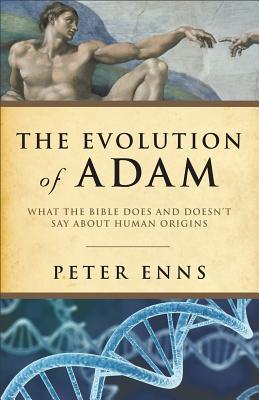
The Evolution of Adam

The Evolution of Adam: What the Bible Does and Doesn’t Say About Human Origins by Peter Enns

Summary

Can Christianity and evolution coexist? Traditional Christian teaching presents Jesus as reversing the effects of the fall of Adam. But an evolutionary view of human origins doesn’t allow for a literal Adam, making evolution seemingly incompatible with what Genesis and the apostle Paul say about him. 

For Christians who both accept evolution and want to take the Bible seriously, this can present a faith-shaking tension. Popular Old Testament scholar Peter Enns offers a way forward by explaining how this tension is caused not by the discoveries of science but by false expectations about the biblical texts.

My Thoughts

I really appreciated this book. The reading I have done so far on Christianity and evolution focused on the various beliefs about the origins of life as well as the stories of a worldwide flood, and I hadn’t really thought about the implications of this as it relates to the existence of Adam.

Enns spends time discussing the appearance of Adam in the Old Testament as well as the mentions made of Adam by Paul in the New Testament. He explains a lot about the cultural and theological environments of both times and how those environments affected the way the Scriptures were written, as well as how the time we live in affects the way we interpret it.

As he states in Chapter 6: Paul as an Ancient Interpreter of the Old Testament:

The authors of Scripture did not speak at a safe distance from their culture but wrote as people living in a particular time and place in human history….The Old Testament already does in principle what Paul is doing here: reworking the past to speak to the present….It is the very act of altering the past to address present circumstances that ensures Scripture’s continuation as the active and abiding Word of God, not a relic of a bygone era.

The Evolution of Adam gave me a lot to think about, and I am glad I got the chance to read it. I would recommend it to anyone with an interest in the topic.

What I Read This Week – July 26th

This week I only finished 2 books. I try to read 1 nonfiction book every month, and this week I read my nonfiction selection for July. Even though I do want to read nonfiction, I still have a mental block that makes me resist picking it up and diving in, so having the objective goal of 1 per month helps me stay accountable.

⭐⭐⭐⭐

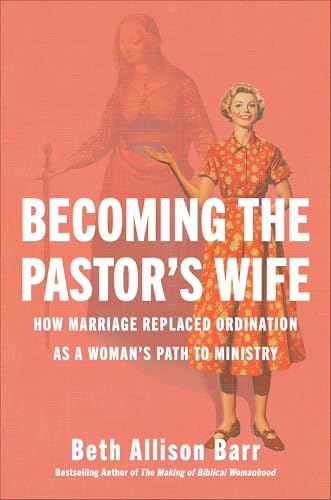
Becoming the Pastor’s Wife: How Marriage Replaced Ordination as a Woman’s Path to Ministry by Beth Allison Barr

This book gives an account of how we have seen women in ministry treated in the Bible to medieval times to the present. The present/recent history deals mainly with the SBC, a conservative denomination in the US.

I have to admit I skimmed some of it, but I did find it very interesting how women have been moved out of leadership roles into often unpaid, non-leader ministry, especially in terms of the role of the pastor’s wife.

If you are looking for a good discussion of women in ministry, this is a good choice. For more general info on how women are treated in conservative circles, check out her earlier book The Making of Biblical Womanhood, which I highly recommend.

⭐⭐⭐⭐⭐

Flirting Lessons by Jasmine Guillory

I loved this one! The characters were so well done and the relationships (both friendly and romantic) were so realistic. I really enjoyed her writing style, and I appreciated that even when there were miscommunications, they weren’t cringe-inducing but instead opportunities for growth and honesty.

What I Read This Week – June 21st

I finished three books this week, two fiction and one nonfiction.

⭐⭐⭐/5
Recipe for Persuasion by Sonali Dev – The Rajes #2

I was really looking forward to this after reading the first book in the series, which is based on Pride & Prejudice. This one is based on Persuasion, which is my favorite Austen book, but I had trouble connecting it to that novel. Yes, there is the second-chance romance between Ashna and Rico, but there is also an equally prominent storyline of the troubled relationship between Ashna and her mother. There are a lot of good topics explored in this book, but some of them are quite heavy and I also would have enjoyed it a lot more if I wasn’t looking for the Austen connection while I was reading.

⭐⭐⭐⭐/5
The Unlikely Pursuit of Mary Bennet by Lindz McLeod – Austentatious #1

As you can tell from my first book this week, I am a sucker for an Austen spinoff, and this was an enjoyable entry in that category. I liked the colorful characters and found the queer romantic storyline a lot of fun!

⭐⭐⭐⭐⭐/5
God and the Gay Christian: The Biblical Case in Support of Same-Sex Relationships by Matthew Vines

I highly recommend this book to anyone who has questions about the American evangelical church’s views on same-sex relationships. It takes a lot of courage to examine beliefs that you have been fed all of your life, and Vines shows how he and his dad wrestled with this topic and found freedom on the other side.

Reading While Black

Reading While Black: African American Biblical Interpretation as an Exercise in Hope
By Esau McCaulley

📜Summary
Reading While Black is a personal and scholarly testament to the power and hope of Black biblical interpretation. At a time in which some within the African American community are questioning the place of the Christian faith in the struggle for justice, New Testament scholar McCaulley argues that reading Scripture from the perspective of Black church tradition is invaluable for connecting with a rich faith history and addressing the urgent issues of our times.

He advocates for a model of interpretation that involves an ongoing conversation between the collective Black experience and the Bible, in which the particular questions coming out of Black communities are given pride of place and the Bible is given space to respond by affirming, challenging, and, at times, reshaping Black concerns. McCaulley demonstrates this model with studies on how Scripture speaks to topics often overlooked by white interpreters, such as ethnicity, political protest, policing, and slavery.

Ultimately McCaulley calls the church to a dynamic theological engagement with Scripture, in which Christians of diverse backgrounds dialogue with their own social location as well as the cultures of others. Reading While Black moves the conversation forward.

💬My Thoughts
I really appreciated learning from McCaulley’s perspective on a variety of topics, and I was interested in his interpretation of the Biblical passages he used to support his arguments. I did find the book to be quite scholarly, and I don’t feel that I have the background knowledge I would need to evaluate his conclusions without reading more in this area.

What I’m Reading – May 2025

What I’m Reading Now

Fiction – Plymouth Undercover by Pamela M. Kelley – Court Street Investigations #1

Nonfiction – The Evangelical Imagination: How Stories, Images, and Metaphors Created a Culture in Crisis by Karen Swallow Prior

What I Recently Finished

Fiction

  • How to Get a (Love) Life by Rosie Blake
  • Sunrise on the Reaping by Suzanne Collins – The Hunger Games #0.5
  • The Day Shelley Woodhouse Woke Up by Laura Pearson
  • Young Jane Young by Gabrielle Zevin
  • Lethal Prey by John Sandford – Lucas Davenport #35; Virgil Flowers #16
  • Billy Straight by Jonathan Kellerman – Petra Connor #1
  • Twisted by Jonathan Kellerman – Petra Connor #2

Nonfiction

  • The Great Sex Rescue: The Lies You’ve Been Taught and How to Recover What God Intended by Sheila Wray Gregoire, Rebecca Gregoire Lindenbach, and Joanna Sawatsky

Short Stories

  • The Bookstore Sisters by Alice Hoffman – The Once Upon a Time Bookshop #1
  • The Bookstore Wedding by Alice Hoffman – The Once Upon a Time Bookshop #2
  • The Bookstore Keepers by Alice Hoffman – The Once Upon a Time Bookshop #3
  • The One That Got Away by Mike Gayle
  • The Sublet by Greer Hendricks
  • The Fall Risk by Abby Jimenez
  • The Tomorrow Box by Curtis Sittenfeld
  • Giraffe & Flamingo by Curtis Sittenfeld
  • Sebastian and the Troll by Fredrik Backman
  • The Cold Equations by Tom Godwin

What I Added to my TBR

Fiction

  • How to Find Your (First) Husband by Rosie Blake
  • The Gin O’Clock Club by Rosie Blake
  • Lessons at the School by the Sea by Jenny Colgan – School by the Sea #3
  • Studies at the School by the Sea by Jenny Colgan – School by the Sea #4
  • Meet Me at the Seaside Cottages by Jenny Colgan
  • The Secret Christmas Library by Jenny Colgan
  • Betting on Good by Wendy Francis
  • Same Time Next Week by Milly Johnson
  • The Unlikely Pursuit of Mary Bennet by Lindz McLeod
  • The Many Futures of Maddy Hart by Laura Pearson
  • I Wanted You to Know by Laura Pearson
  • Missing Pieces by Laura Pearson
  • Nobody’s Wife by Laura Pearson
  • The Beforelife of Eliza Valentine by Laura Pearson
  • The Woman Who Met Herself by Laura Pearson
  • In the Woods by Tana French – Dublin Murder Squad #1
  • Storm Peak by John A. Flanagan – Jesse Parker Mystery #1
  • Avalanche Pass by John A. Flanagan – Jesse Parker Mystery #2

Nonfiction

  • How I Changed My Mind About Evolution: Evangelicals Reflect on Faith and Science by Kathryn Applegate (Editor) and J.B. Stump (Editor)
  • The Evolution of Adam: What the Bible Does and Doesn’t Say about Human Origins by Peter Enns
  • Autism Out Loud: Life with a Child on the Spectrum, from Diagnosis to Young Adulthood by Kate Swenson, Adrian Wood, and Carrie Cariello

Short Stories

  • The Bookstore Family by Alice Hoffman – The Once Upon a Bookshop #4

TBR Stats/Goal Updates

  • I currently have 160 books on my TBR. Of those, 17 are nonfiction and 143 are fiction.
  • I finished 5 more of my 25 in 2025 list, bringing that total to 18.
  • I have read 46 books so far this year (my goal is 75).
  • One of my goals was to read 2 nonfiction books each month. So far this year I have read 1 per month.

If you’re on Goodreads, feel free to add me as a friend. I’m always looking for new recommendations!

Baby Dinosaurs on the Ark?

Baby Dinosaurs on the Ark? The Bible and Modern Science and the Trouble of Making it All Fit by Janet Kellogg Ray

Summary

Janet Kellogg Ray, a science educator who grew up a creationist, doesn’t want other Christians to have to do the exhausting mental gymnastics she did earlier in her life. Working through the findings of a range of fields including geology, paleontology, and biology, she shows how a literal interpretation of the book of Genesis simply doesn’t mesh with what we know to be reality. But as someone who remains a committed Christian, Ray also shows how an acceptance of the theory of evolution is not necessarily an acceptance of atheism, and how God can still be responsible for having created the world, even if it wasn’t in a single, momentary, miraculous event.

Topics Covered

  • The Nature of Science
  • Young Earth Creationism
  • Old Earth Creationism
  • Intelligent Design
  • Theistic Evolution/Evolutionary Creationism
  • Naturalism and Scientism
  • The Age of the Universe and the Earth
  • The Flood and the Fossil Record
  • The Missing Link
  • Human Evolution
  • Leaving Creationism without Leaving God

My Thoughts

I grew up in a conservative pentecostal church and was taught to believe in a young earth and a literal six day creation period along with a worldwide catastrophic flood.  When I was a teenager in the 1980s, I was exposed to the Institute for Creation Research and became obsessed with their materials.  I even challenged a student teacher in one of my high school science classes once.  I am embarrassed now to remember how superior I felt knowing “the truth” that most scientists didn’t understand.

Over the last several years, I have come to the realization that this belief was rooted in fear.  I was afraid that if I listened to mainstream science, I would lose my faith.  It has taken quite a while to overcome these fears, but I no longer believe in a literal reading of the Bible as it relates to science.

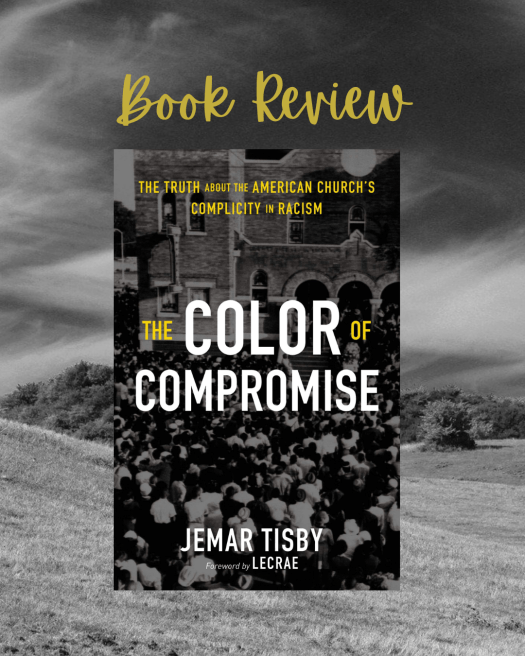
The Color of Compromise

The Color of Compromise: The Truth About the American Church’s Complicity in Racism by Jemar Tisby

This was an intense and compelling read. Tisby takes us through the history of racism in America and highlights the ways that the church has participated in and contributed to the problem during each period. 

Each time progress has been made, there has been a corresponding backlash either outright opposing the forward movement or simply failing to be supportive. After slavery was abolished, we saw the introduction of the KKK and Jim Crow laws. After the Civil Rights Act was passed, we saw segregation academies established and white communities resisting residential desegregation. 

Tisby goes on to discuss the organizing of the religious right at the end of the twentieth century and the rise of law-and-order politics. He also delves into the more recent responses to the black lives matter movement and the 2016 presidential election. 

In the last chapter, titled “The Fierce Urgency of Now,” Tisby offers practical ways to address racial injustice in America. He presents solutions that go beyond the conventional advice to focus on the relational aspects of race and instead combat the structures and institutions of racial inequality in our country.

I cannot recommend this book highly enough. The combination of historical overview with practical strategies for implementing racial justice in our churches and communities is incredibly powerful.

What I’m Reading – March 2025

What I’m Reading Now

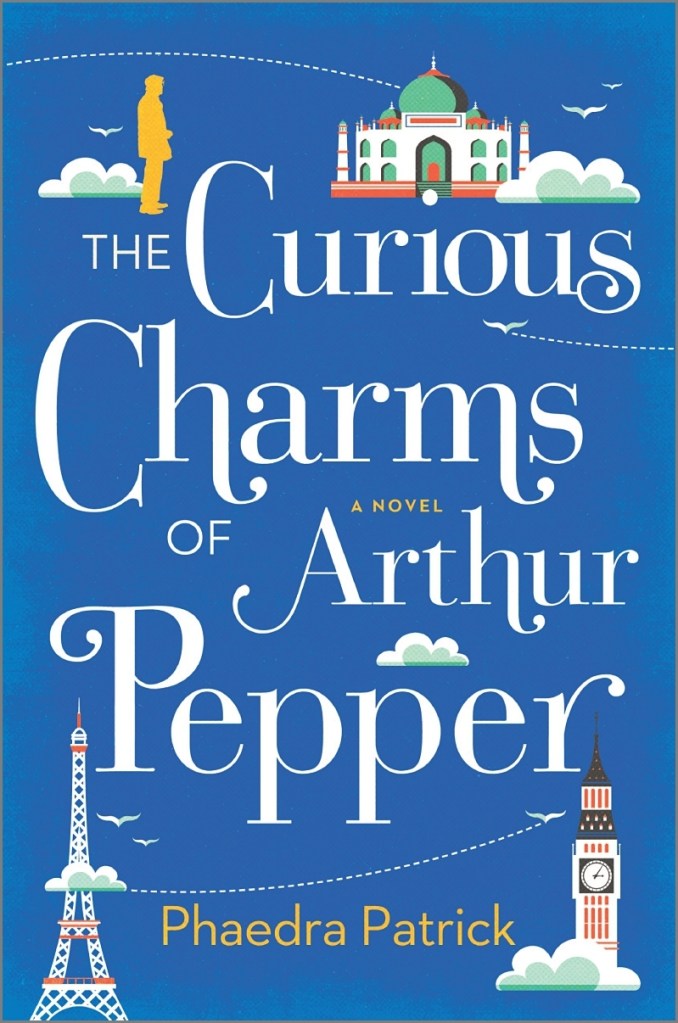
I am currently reading The Curious Charms of Arthur Pepper by Phaedra Patrick. This was published in 2016 and is part of my 25 in 2025 challenge to read some of the backlist books on my TBR. It was also her debut novel. I just started it but I like it so far.

What I Recently Finished

Fiction

  • Lawyers and Lattes: Happily Ever After in Devon by Rebecca Paulinyi – I found this author during a stuff your Kindle day a year or so ago and liked the free book enough to want to get this one. This book was entertaining enough that I have added book three to my TBR.
  • The London Flat: Second Chances by Juliet Gauvin – I had enjoyed the first book in this series, which I got during a stuff your Kindle day a while back, but this one fell flat for me. I didn’t find the plot believable.
  • Hope in a Jar by Beth Harbison – Fun read! The action flips between the present day and the characters’ time in junior high and high school. I actually liked the chapters from the past better than the present; the author does a good job writing the younger characters. The present-day plot felt a bit childish to me, like the characters hadn’t really grown up since high school, which perhaps was the point.
  • What We Keep by Elizabeth Berg – I didn’t love it, even though Elizabeth Berg is one of my favorite writers. It started out good, but I just lost interest partway through.
  • Bonded in Death by J.D. Robb – I have been a longtime fan of the In Death series, and this book delivered on all fronts. I loved it!
  • Crime Scene by Jonathan Kellerman and Jesse Kellerman – I am a big fan of Jonathan Kellerman’s Alex Delaware series, so I had high hopes for this collaboration with his son Jesse. I thought it was alright, but it didn’t pull me in like the Delaware books do. I couldn’t really relate to the main character, or any of the characters, very much, and I didn’t find the storyline very compelling.
  • The Banned Books Club by Brenda Novak – I am still mulling over this one and plan to write a review soon. I gave it three stars for now.
  • Open Season by Jonathan Kellerman – I usually love the books in the Alex Delaware series, but this one didn’t hold my interest very well. The main draw of the series is that Delaware is a psychologist, and the crimes usually involve some psychological twists and turns. This one felt like more straightforward police work to me.

Nonfiction

  • The Color of Compromise: The Truth about the American Church’s Complicity in Racism by Jemar Tisby – This book was so intense. I am still processing it and plan to write a full review soon.

What I Added to my TBR

  • Not Quite by the Book by Julie Hatcher – my Amazon First Reads pick for February
  • The Fall Risk by Abby Jimenez – bonus short story from Amazon First Reads
  • A Good Indian Girl by Mansi Shah – a recent release from this author I discovered last year
  • More Days at the Morisaki Bookshop by Satoshi Yagisawa – a sequel that I want to read
  • Feeling the Fireworks: Starting Over in Devon by Rebecca Paulinyi – #3 in the South West series
  • Twisted by Jonathan Kellerman – #2 in the Petra Connor series, I have #1 on my 25 in 2025 list

TBR Stats

  • I currently have 152 books on my TBR
  • Of those, 20 are nonfiction and 132 are fiction
  • I have finished 6 of my 25 in 2025 challenge

If you’re on Goodreads, feel free to add me as a friend. I’m always looking for new recommendations!

Searching for Sunday: Loving, Leaving, and Finding the Church

In this 2015 memoir, the late Rachel Held Evans shared her journey with church – how she got to the point of leaving the church she had loved and how she struggled with where she belonged after that.  The book is structured around the seven sacraments of the Catholic church: Baptism, Confession, Holy Orders, Communion, Confirmation, Anointing of the Sick, and Marriage. Each section has several chapters where her personal story is woven in with a discussion of the theme.

I really appreciated how Evans shared both the positive and the negative of her experience with church.  She did not paint the conservative church she grew up in as all bad by any means, but she also didn’t shy away from the problems she came to have with some of the beliefs and behaviors she encountered.

After spending some time away from church entirely, she found herself longing for community and began searching for a church where she could experience that alongside people who were also willing to question and examine what they believed.  This quote seems to sum up what she was looking for:

Imagine if every church became a place where everyone is safe, but no one is comfortable.  Imagine if every church became a place where we told one another the truth.  We might just create sanctuary.

I can relate to her struggle with finding yourself in a place that does not align with your beliefs, but then feeling a sense of loneliness and disconnection when no longer inhabiting that space.  I am thankful that I have been able to find a community of faith that allows me to be myself while also challenging me to grow even more.